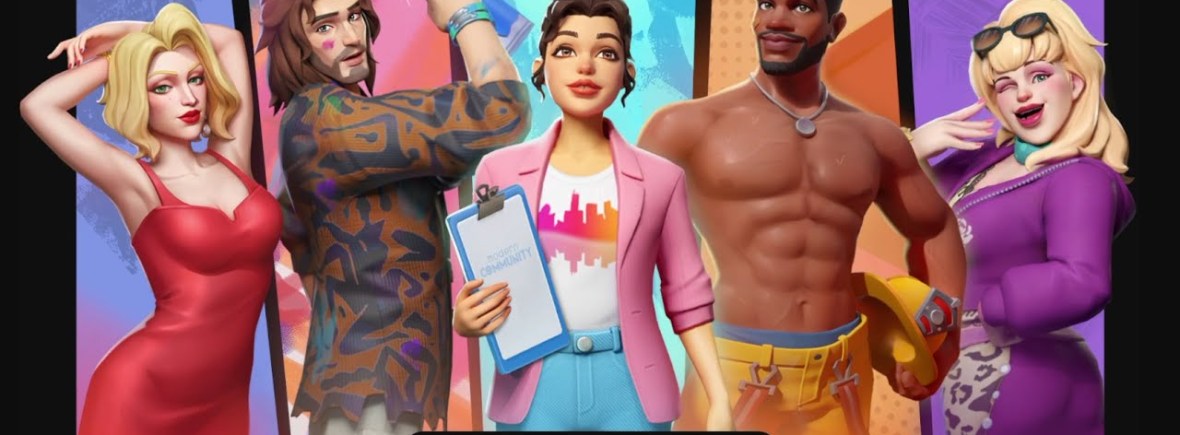
Developer: Magic Tavern
Platform: Mobile (iOS / Android)
Role: Senior Narrative Designer
Genre: Drama / Romance
Format: Match-3 puzzle game
More info: magictavern.com
For the past four years (starting in November 2022), I’ve worked on the development of Modern Community, a narrative-driven match-3 game full of drama, romance, and heart. I started during the early stages of development, saw the project through to its release in 2024, and continued to design new content and makeovers for our devoted players. My responsibilities have included:
- Developing and designing new characters and makeovers
- Developing and outlining story overviews
- Creative task flows and mapping story direction
- World building and narrative development
- Establishing story bibles, writing templates, and visual writing guides
- Establishing a universal standard of organization, naming conventions, and document formats
- Reference images and concept docs for artist visualization and development
- Developing new systems, complete with diverse characters, dialogues, and designs
- Pitch documents and concept proposals
- Setting and maintaining a consistent story tone and narrative design standard
- Coordinating with multiple departments to ensure seamless integration and smooth pipeline production
- Giving and implementing constructive feedback in a timely manner
In addition, I worked diligently to establish and maintain a cohesive, collaborative, and rock solid creative relationship with my team, both on the US and Beijing sides. Building trust between the US and Beijing teams was a top priority for me, and we created something that I will always be proud of. Everyone was able to express their ideas and creativity, leaving their impact in meaningful ways even as we made sure to meet deadlines and achieve pipeline goals.
My contributions to Modern Community include:
Design Templates
When I started working on Modern Community, it was very early stages. So one of the first things I tackled was making sure we had an organized folder for all our documents. I established naming conventions, sorting practices, and grouping categories. I even organized and helped design the dialogue excel sheet, using color-coding to help keep track of branching narratives.
It was very important to have a recognized and familiar, unified style between departments and designers. To that end, I designed templates for task flows, overviews, character concepts, and more.
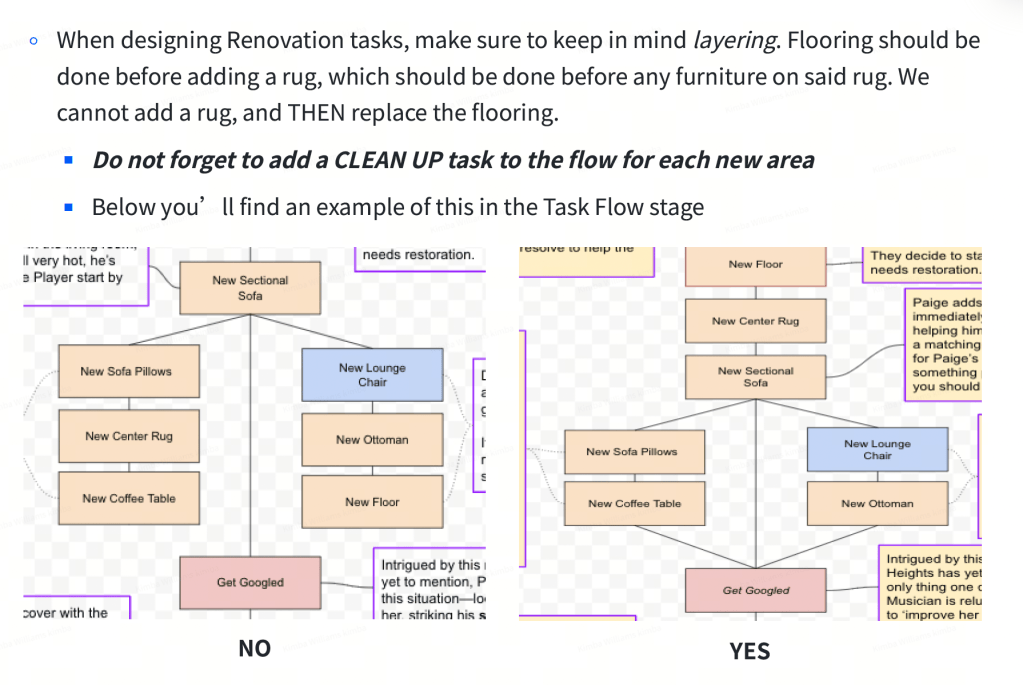
Lastly, I created and maintained a Live Design Rules doc. It was constantly being updated with new guidelines as we were made aware of them, and it was an invaluable training and reference resource for both new and veteran designers. Here’s a small snippet from the document:
Character Concepts
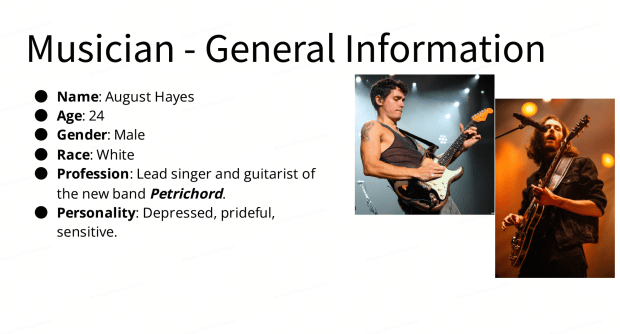
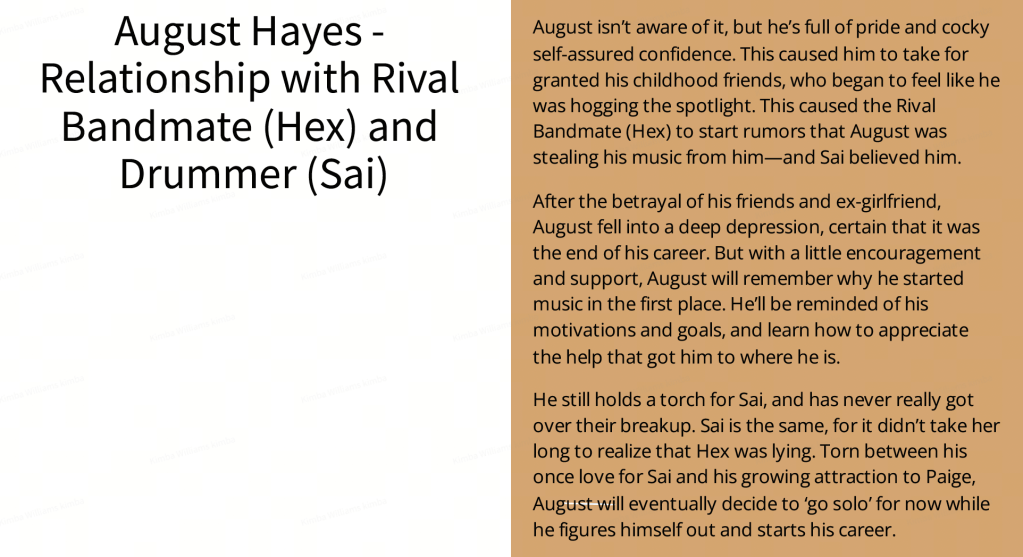
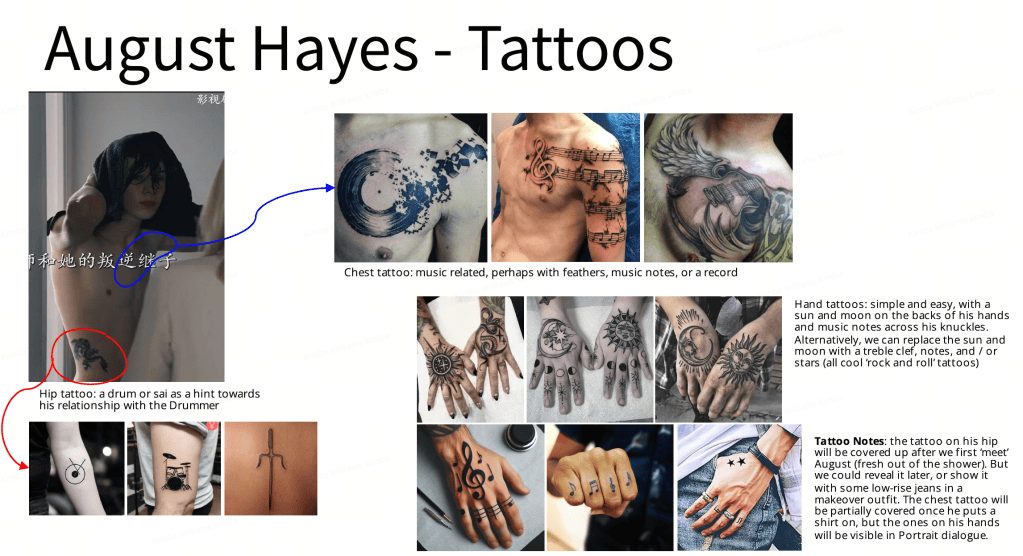
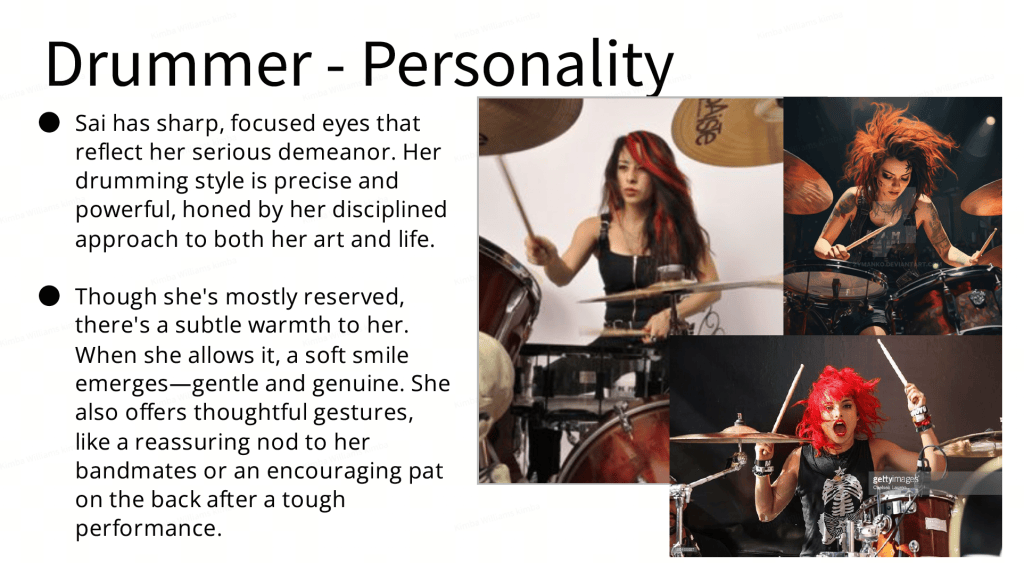
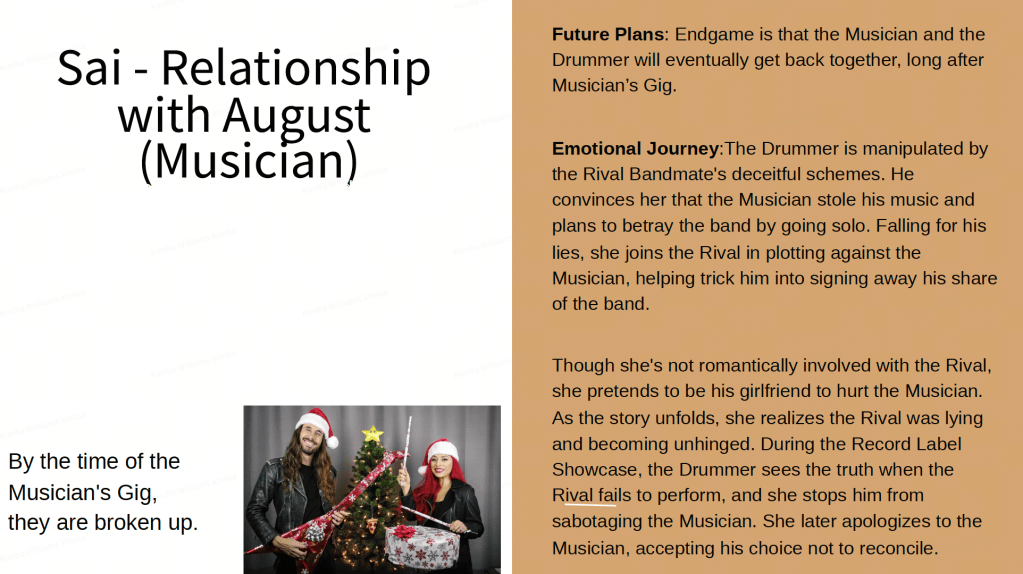
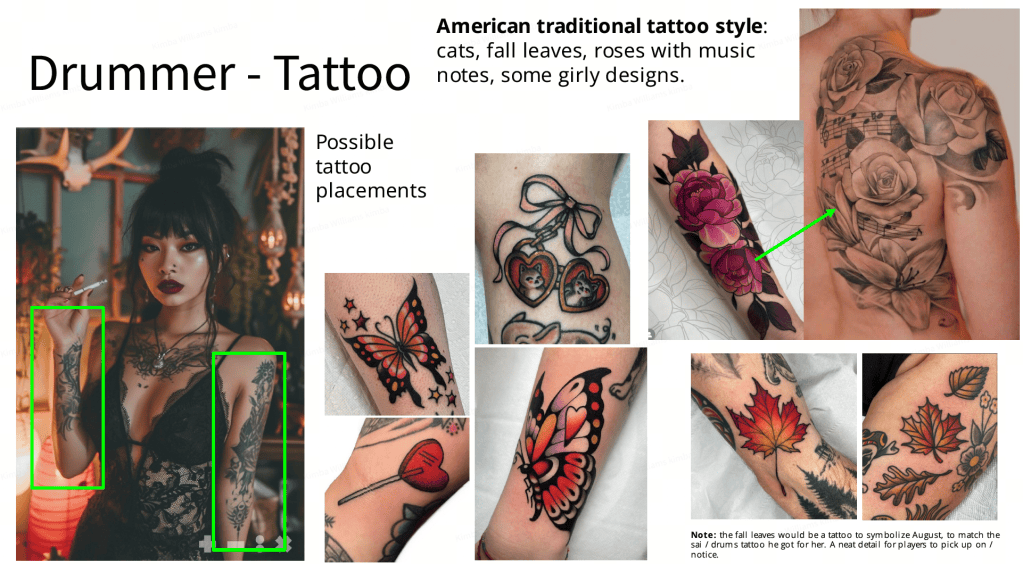
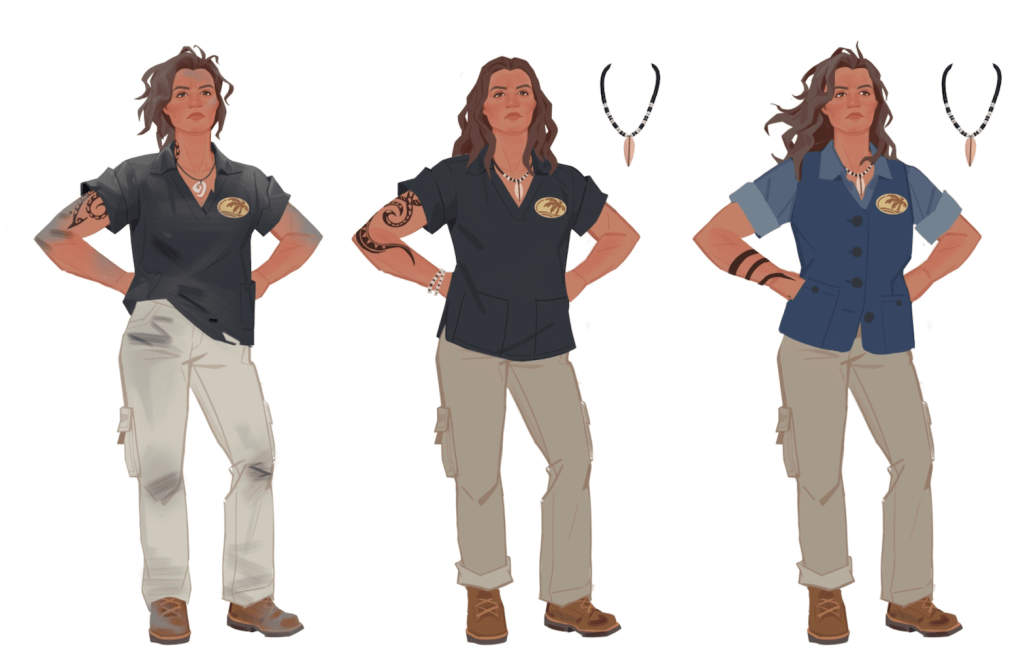
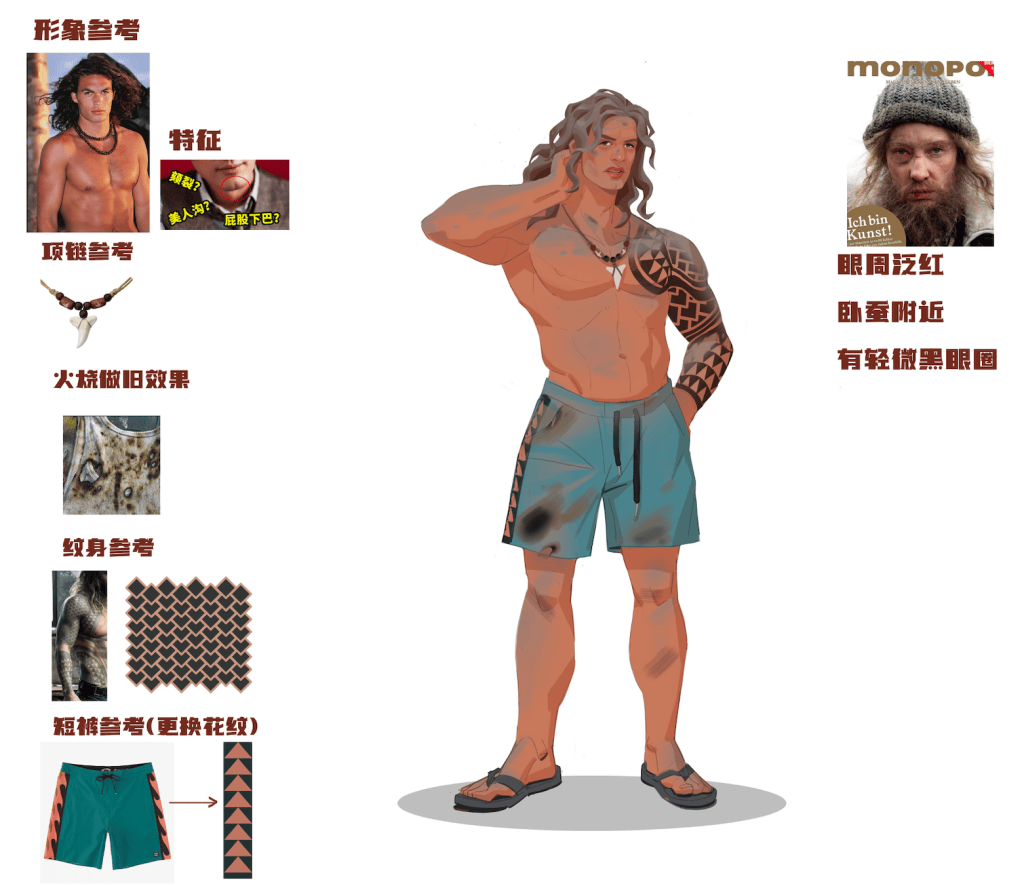
Once we’re close to approving the story overview, we’ll start to design the characters’ appearances. Each character gets their own concept doc, outlining their biography, basic information (age, race, height, etc), face likeness, their hairstyle + outfits (both the intro and final states), base expressions, and finally special / character-unique expressions, emotes, and low-poly map idles.
Task Flows
Once the story overview is approved, I’ll move onto the Task Flow stage. I’ll break down the narrative into individual tasks while taking into account the space and how to move through it in the most organic way. I have to take into account layering (making sure to renovate walls and floors before the items on them in order to avoid clipping), renovating from back to front (within the constraints of a top-down isometric room), and making sure to balance renovation and narrative tasks to maintain player interest.
MUSICIAN’S GIG: CHAPTER 3 EXAMPLE
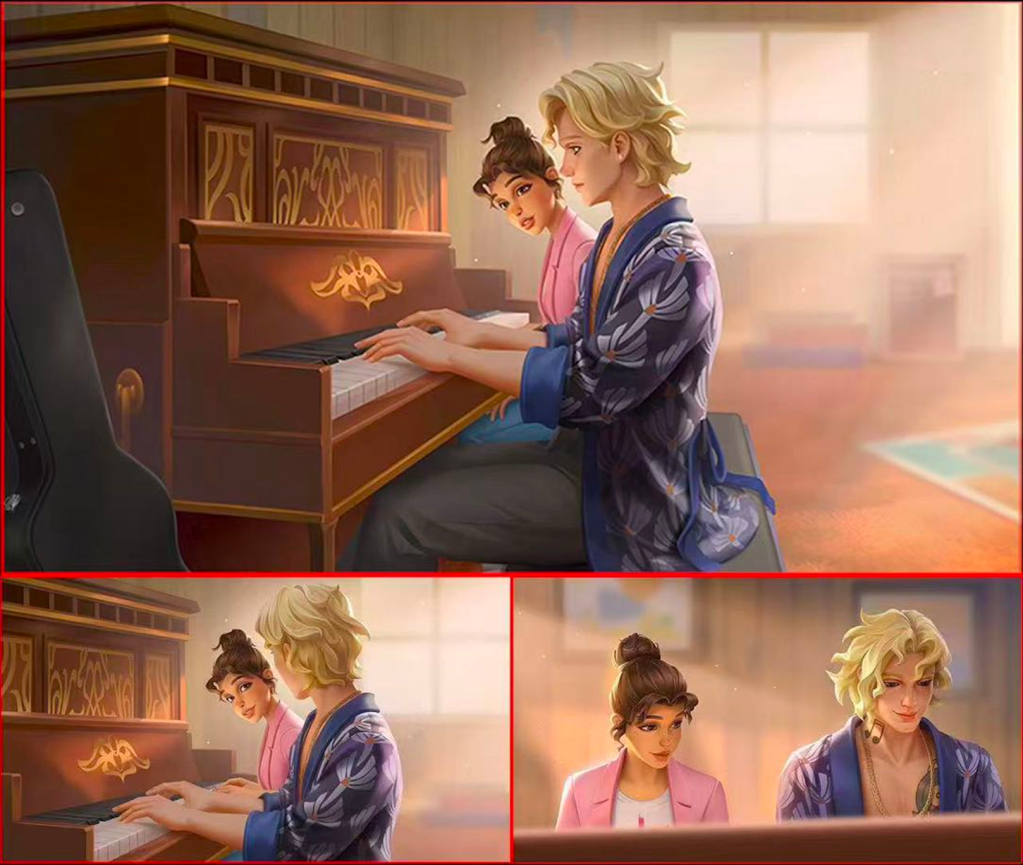
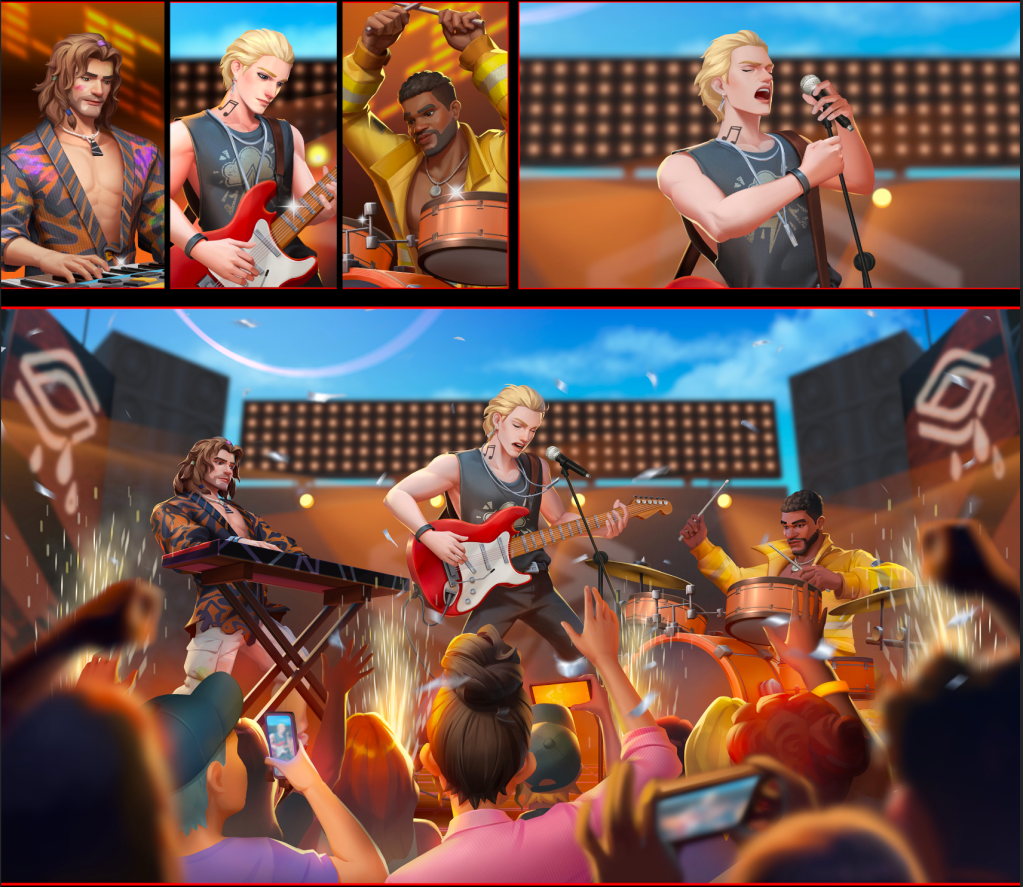
This is a small example of how I took a paragraph from the story overview and translated it into the Chapter 3 Task Flow, using only base initial sketches of the makeover location.
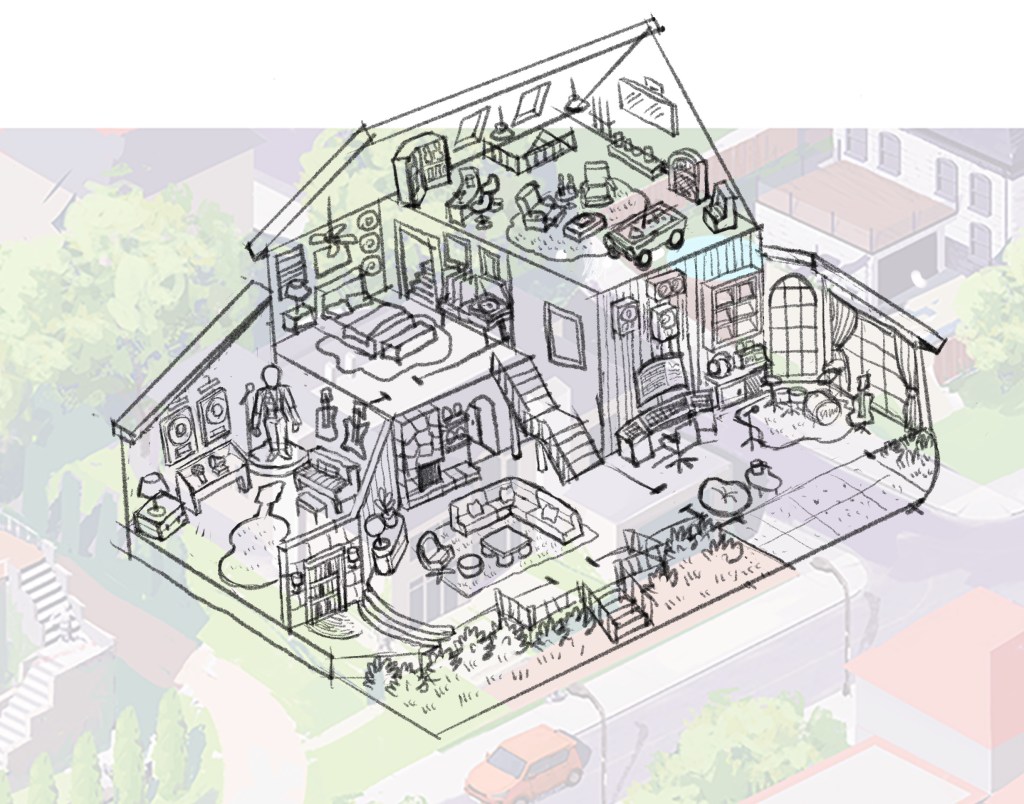
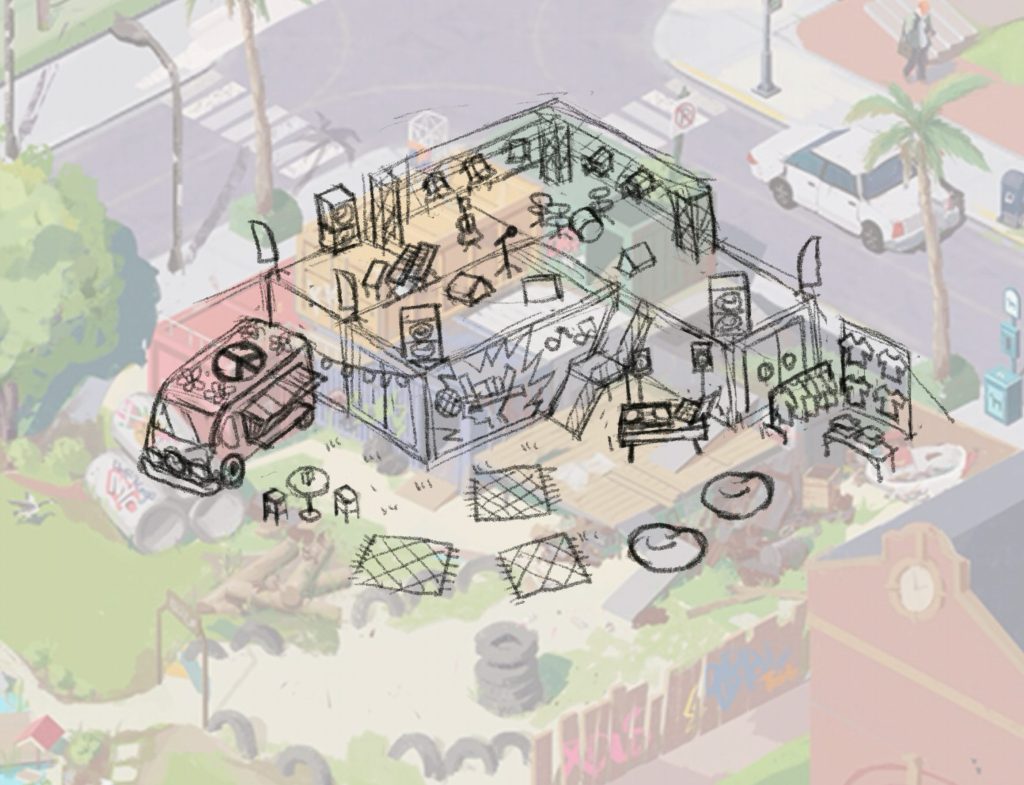
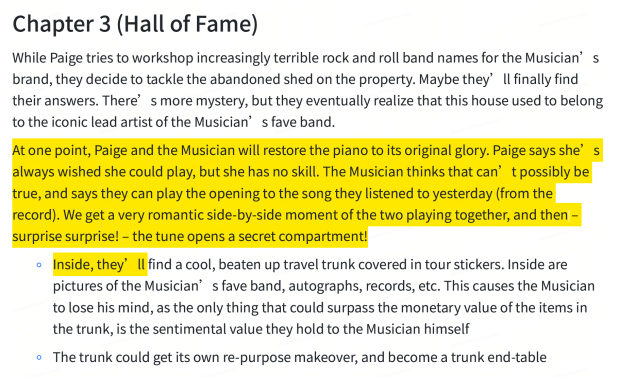
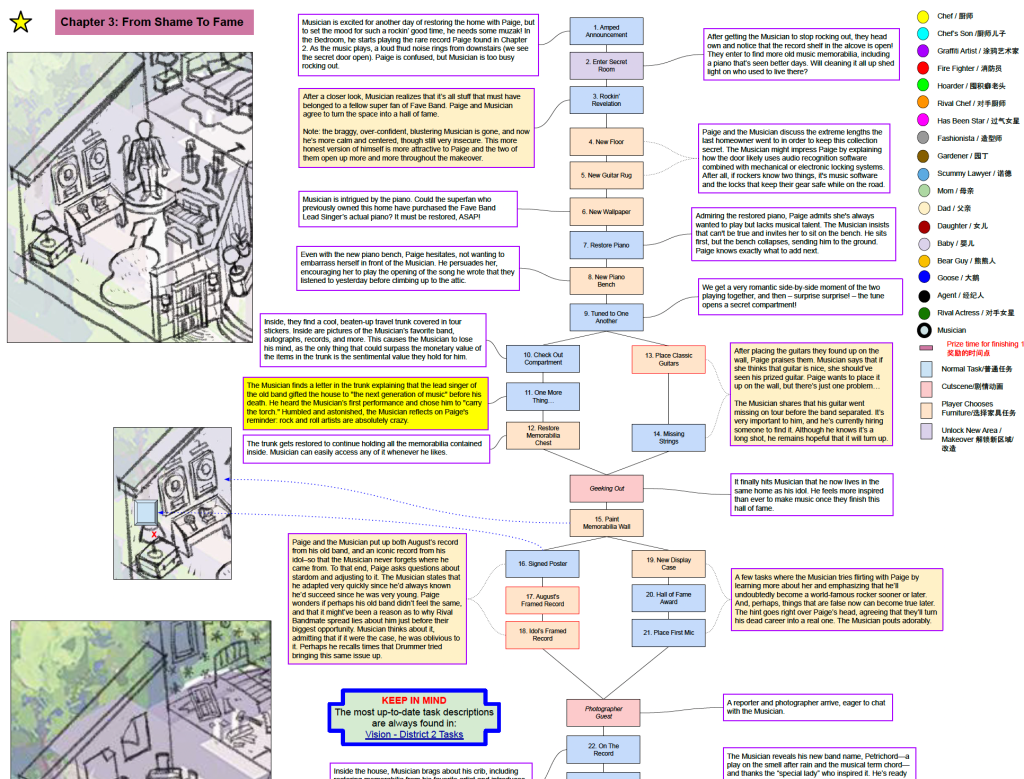
We turned the romantic piano scene into a cinematic that really conveyed how Paige and August were growing closer. Also, as a treat, I wanted to highlight the final cinematic moment of the entire makeover — when Paige helps August put a new band together, compete at the showcase, and put his name on the map as a rock star.
These cinematic moments were very limited, as they took a lot of resources and time to create. So it was my job to find the best places to have these cinematic moments, to best highlight the story progression or to showcase a significant character moment.
Highlight Makeover
This is one of my favorite makeovers that I lead the design team in creating. From early concept to story overview to task flow, character designs, makeover sketches, and more. I worked and coordinated with the artists, scripters, dialogue-writers, translators, and other designers in both the US and the Beijing teams, moving the makeover through the pipeline promptly.
BEACH RESORT
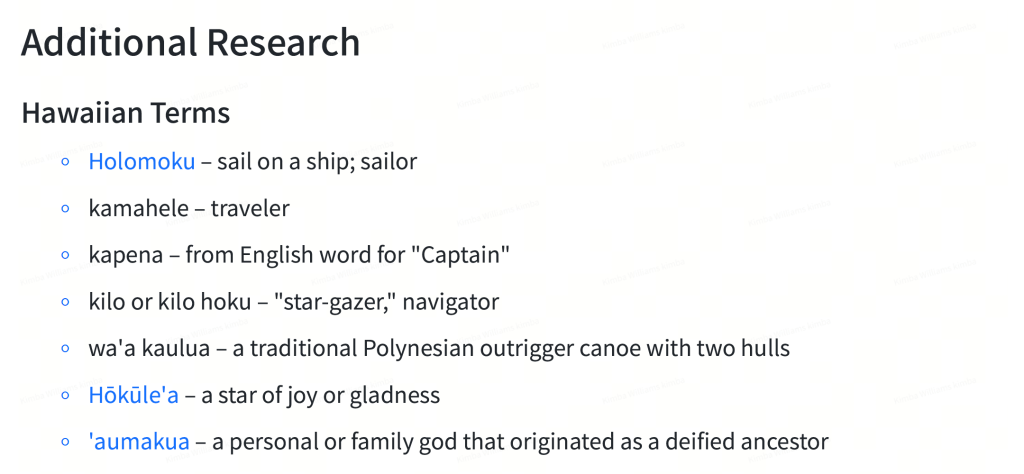
The Beach Resort might be one of my favorite renovations I’ve ever designed. I did a ton of research into the Hawaiian / Samoan culture, language, traditions, naming conventions, and more in order to create a very unique, diverse, and culturally-respectful makeover that would be a treat and a delight for our players.
OVERVIEW / RESEARCH
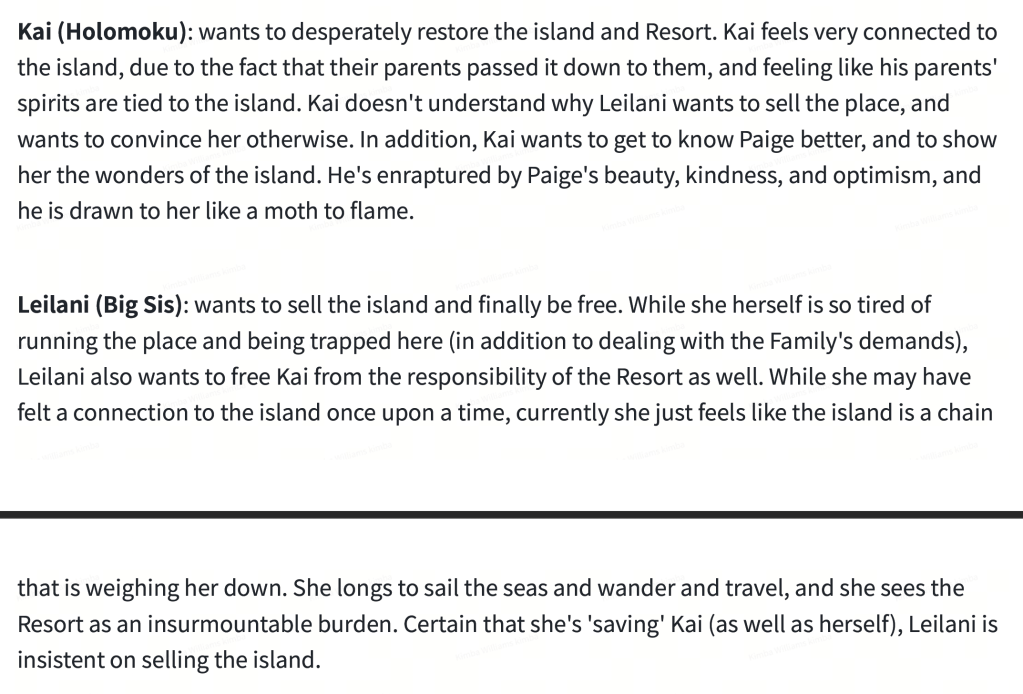
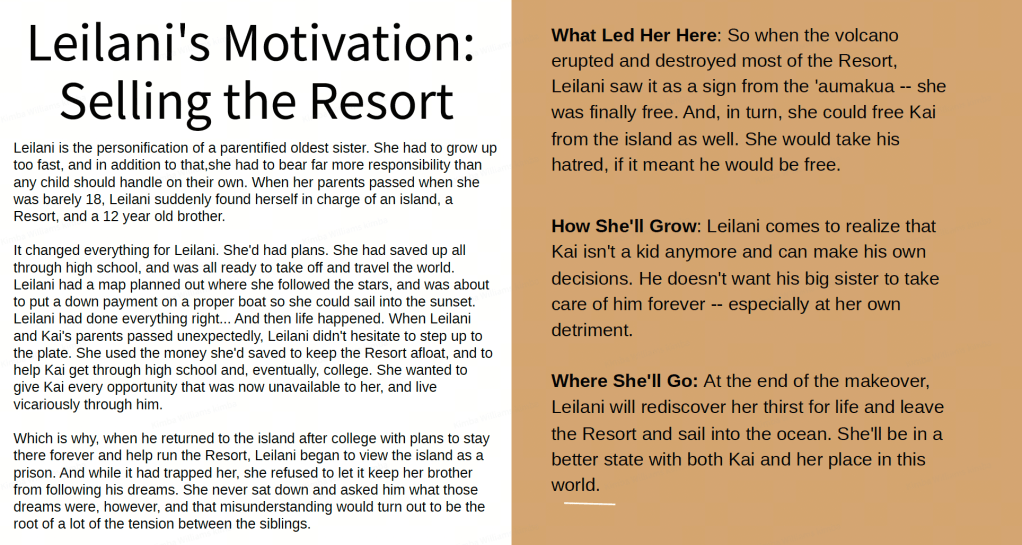
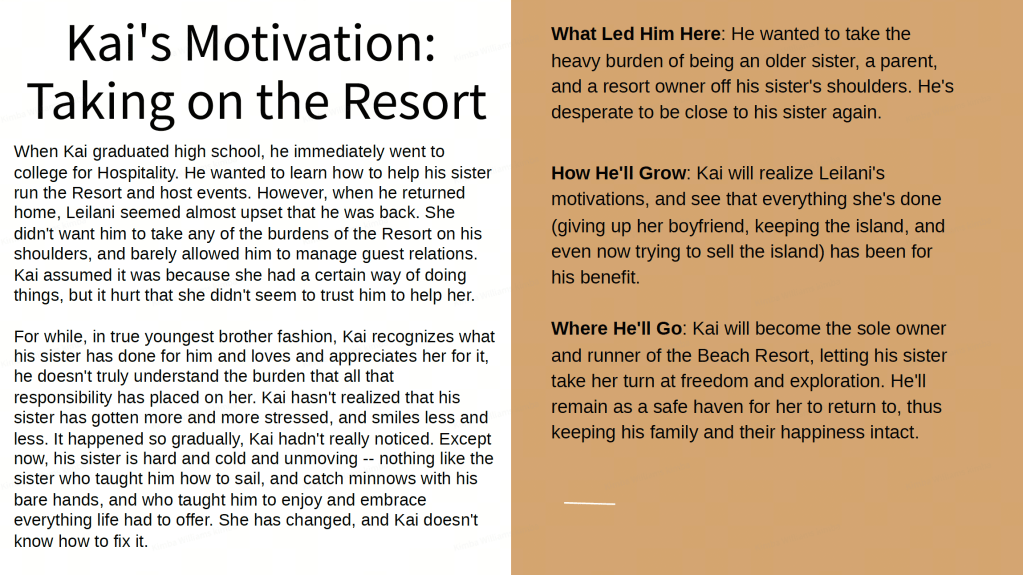
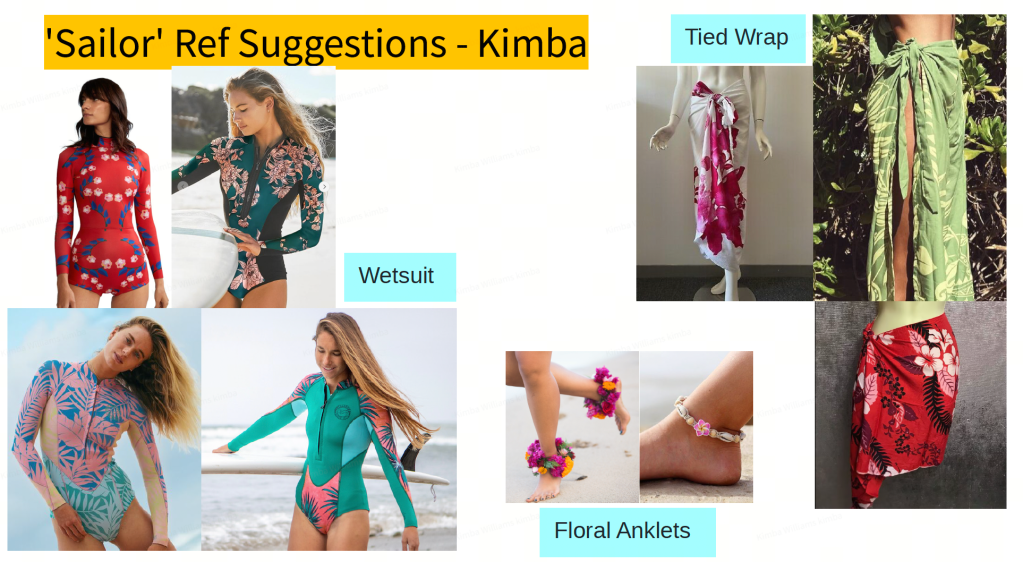
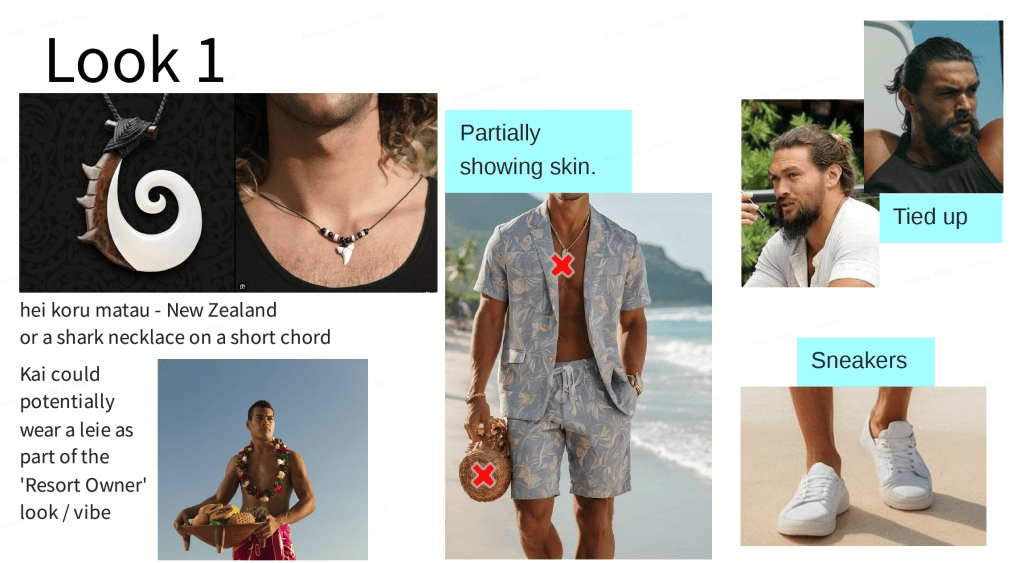
The Story Overview tends to be a long, intensive document that includes character bios, motivations, and media references. In addition, it will outline the entire story, broken down by chapters and full of reference images to help the other design teams and the art team to visualize what I’m trying to convey. Since that’s too long to put here, I included the base character motivations for Kai and Leilani (the main characters of the Beach Resort makeover), as well as a glossary of terms I used in the overview itself.
INTRO STATE
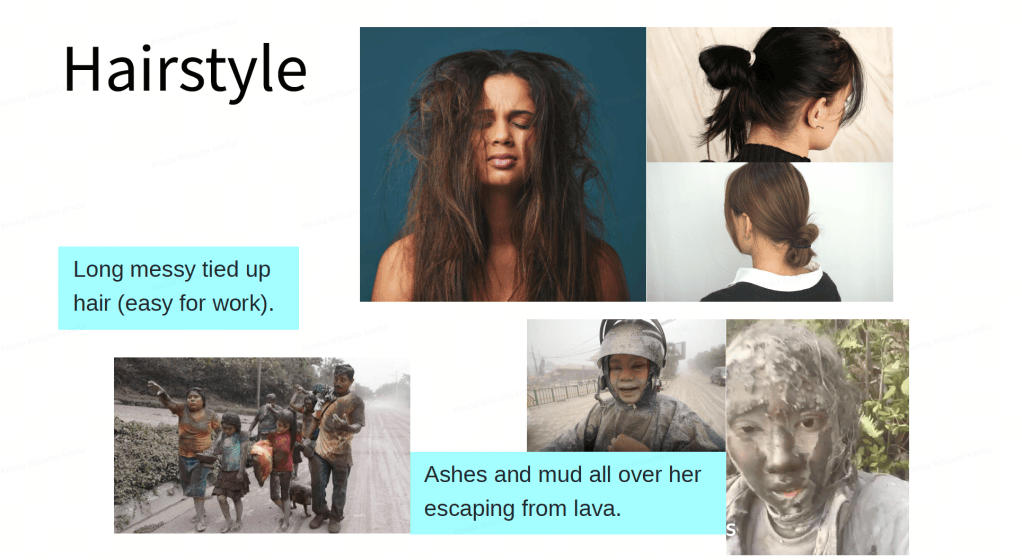
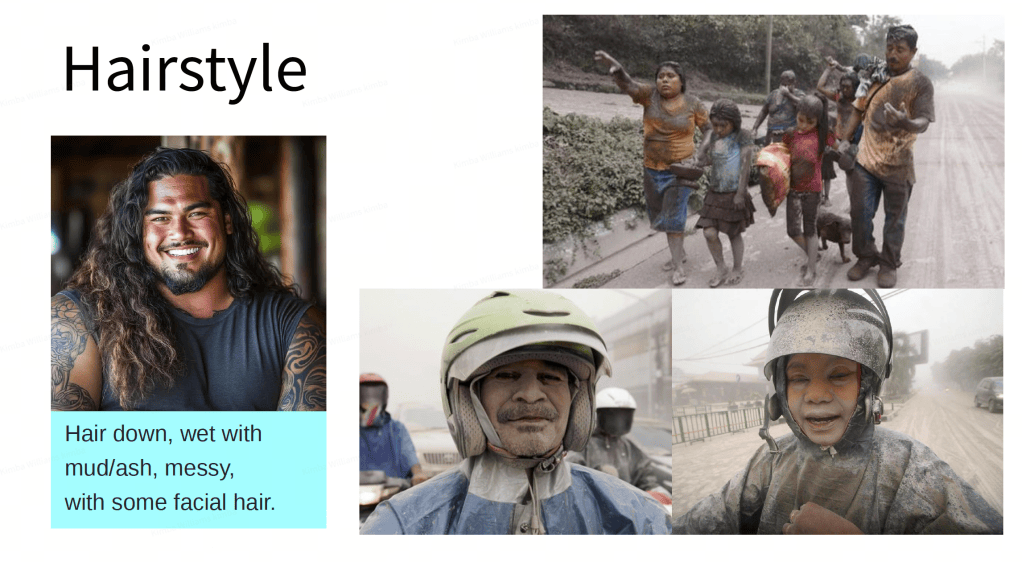
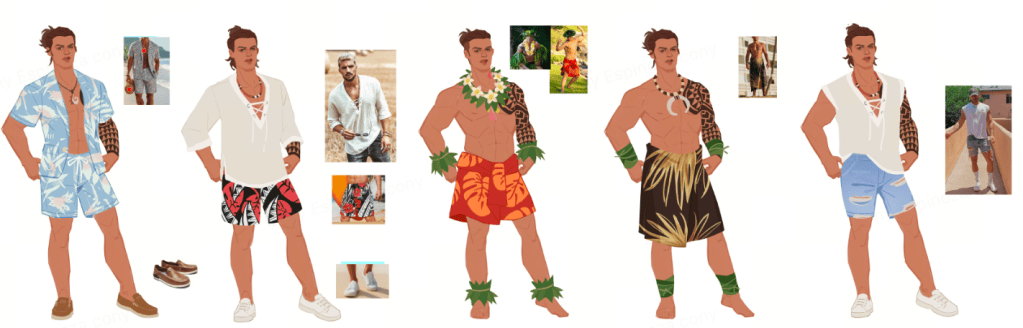
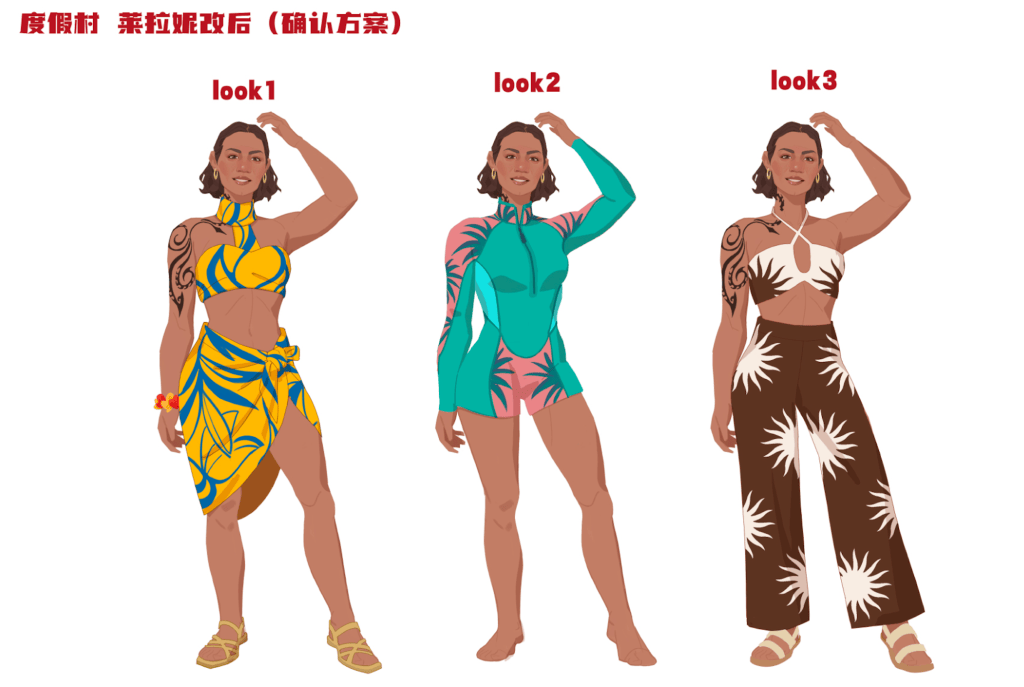
Here are a few slides from the character docs of Leilani and Kai, outlining their motivations, their intro state, and an early concept idea for one of their final looks.
FINAL STATE
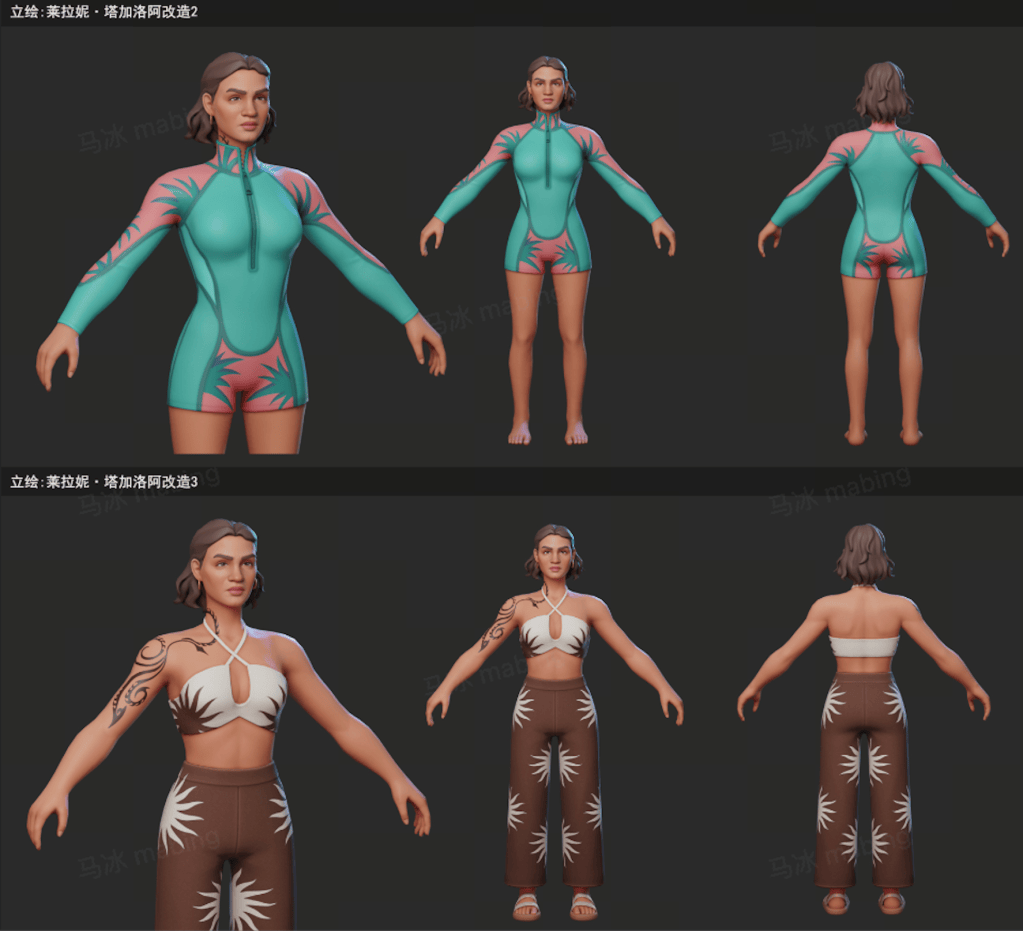
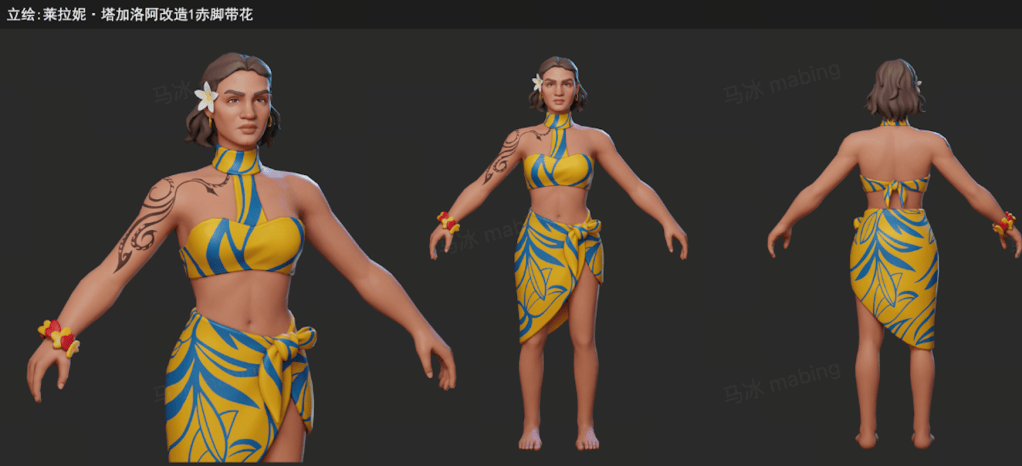
Finally, we get to see early sketches of Kai and Leilani’s final looks, as well as the eventual 3D rendering of Leilani’s final state.
LOCATION MAKEOVER
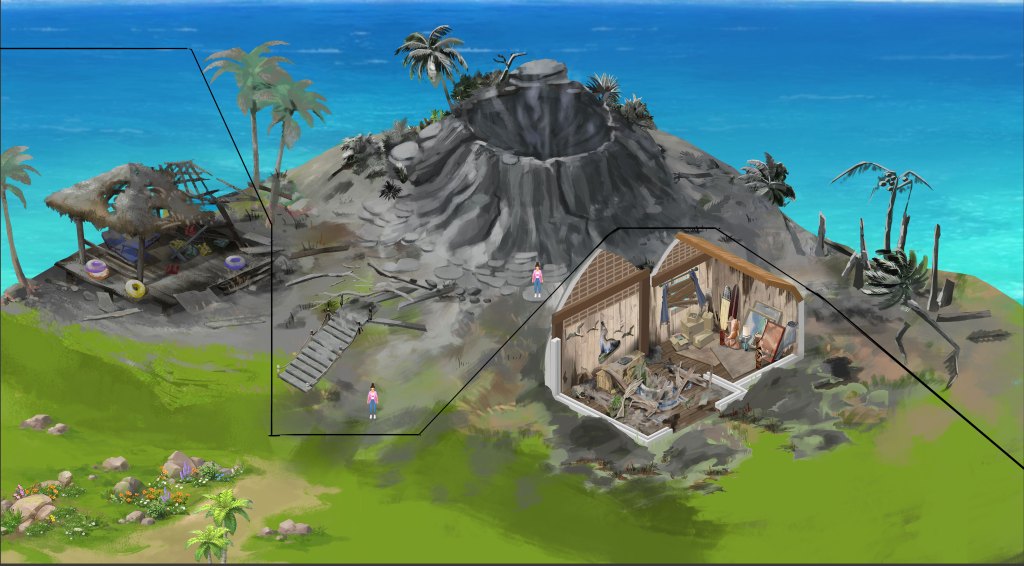
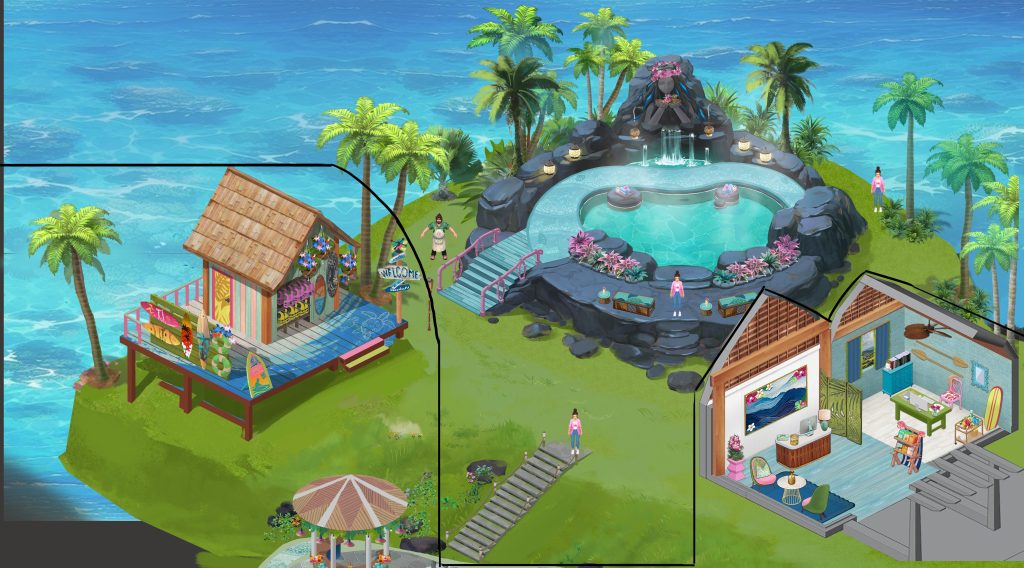
This shows the development of a location from intro state to final state. We would first have sketches of the rough terrain, which would be edited as the Story Overview neared completion, as often narrative-driven events would change the landscape. The Pele hot springs here was something I concepted, collected reference images for, and even sketched to help the art team visualize it. I am so impressed and grateful that they brought it to life.
RESOLUTION
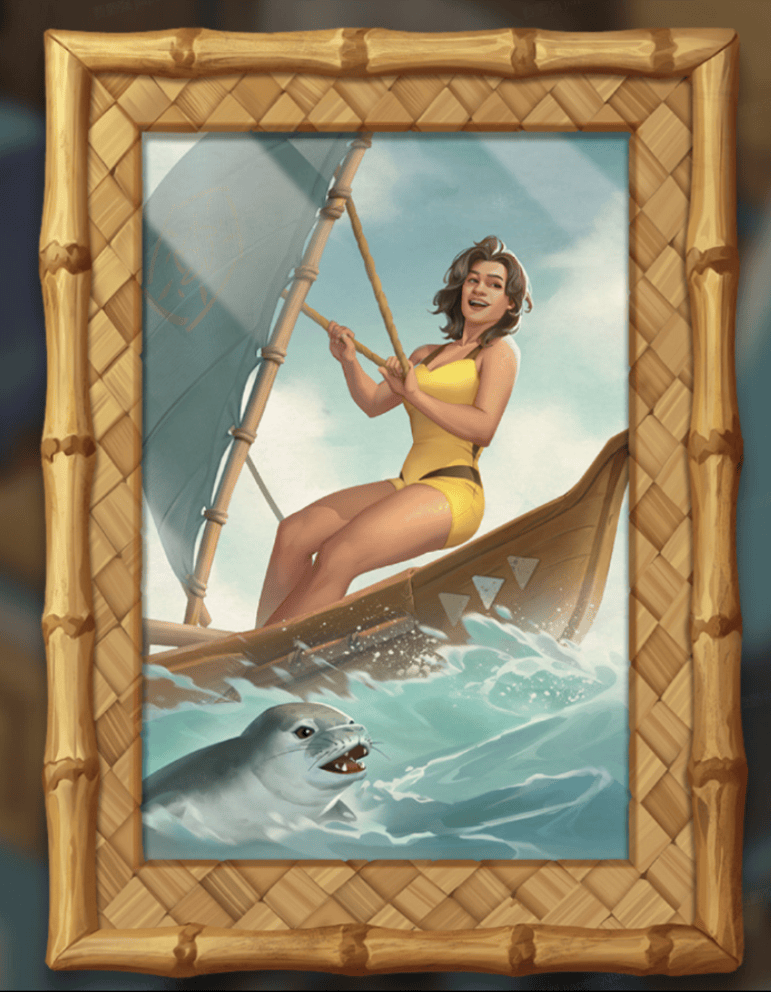
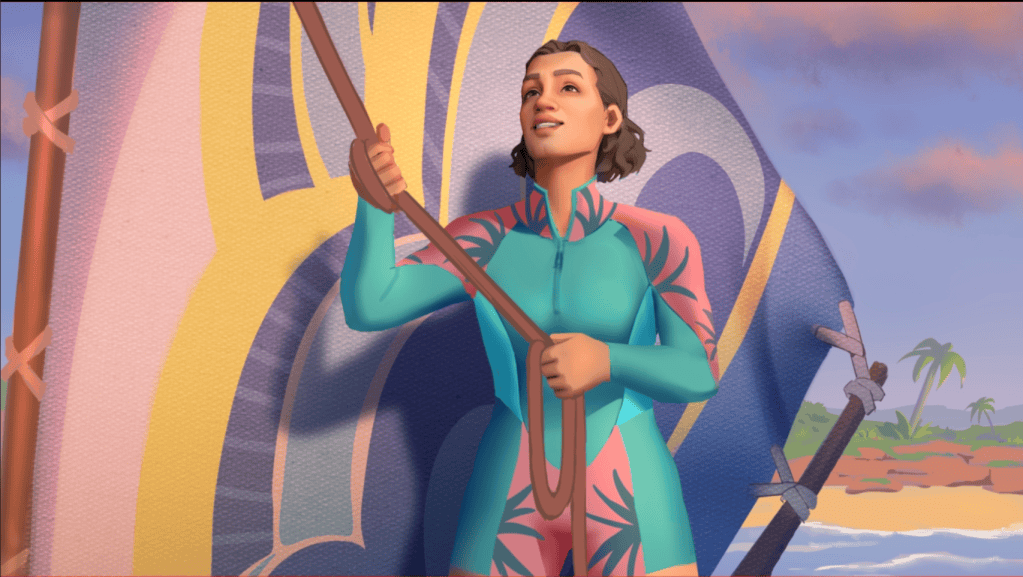
At the end of the Beach Resort, the two siblings finally listen to one another. Kai takes on the Beach Resort, happy to live his dream and run the family business. Meanwhile, Leilani finally lets go of her responsibilities and the pressure of holding everything together. She finally gets to live her dream, and sail off to explore the world! To celebrate this moment, I got to help design a beautiful finale moment (that calls back to a picture we found earlier in the makeover of a young-Leilani, before she gave up on her dream).
Pitch Documents
One thing that I particularly enjoyed doing, was creating pitch documents to solve a highlighted problem or expressed need within the game. I would either create my own sketches to best illustrate my idea, or I would work closely with members of the art team to create amazing concept images.
ARCADE DOC
The Arcade System was an idea to replace the existing Afterparty system, which had received complaints from players before. The Afterparty was a series of levels for players to enjoy after they’d caught up with the existing in-game content. However, those levels provided no rewards, and generally felt like a waste of time to players.
My goal was to create the Arcade System, a place where players could go to play “arcade machines” with different game modes on each one. They would earn special in-system rewards, which could be used to play more games, unlock special prizes, or even personalize the Arcade space with special makeover items.
The document was comprehensive and detailed, starting with an outline of the document’s goals, an overview of what was to come, and the benefits of such a system. The pitch doc outlined 12 potential arcade machines (and an “unlocking” mechanic meant to give us space and time to start with only a couple machines and develop new ones over time). Finally, I included ideas for in-Arcade resources and prizes, showed examples of existing precedents in other mobile games, outlined future ideas for additional expansion, and even introduced plans for potential advertising or merchandising tied to the Arcade.
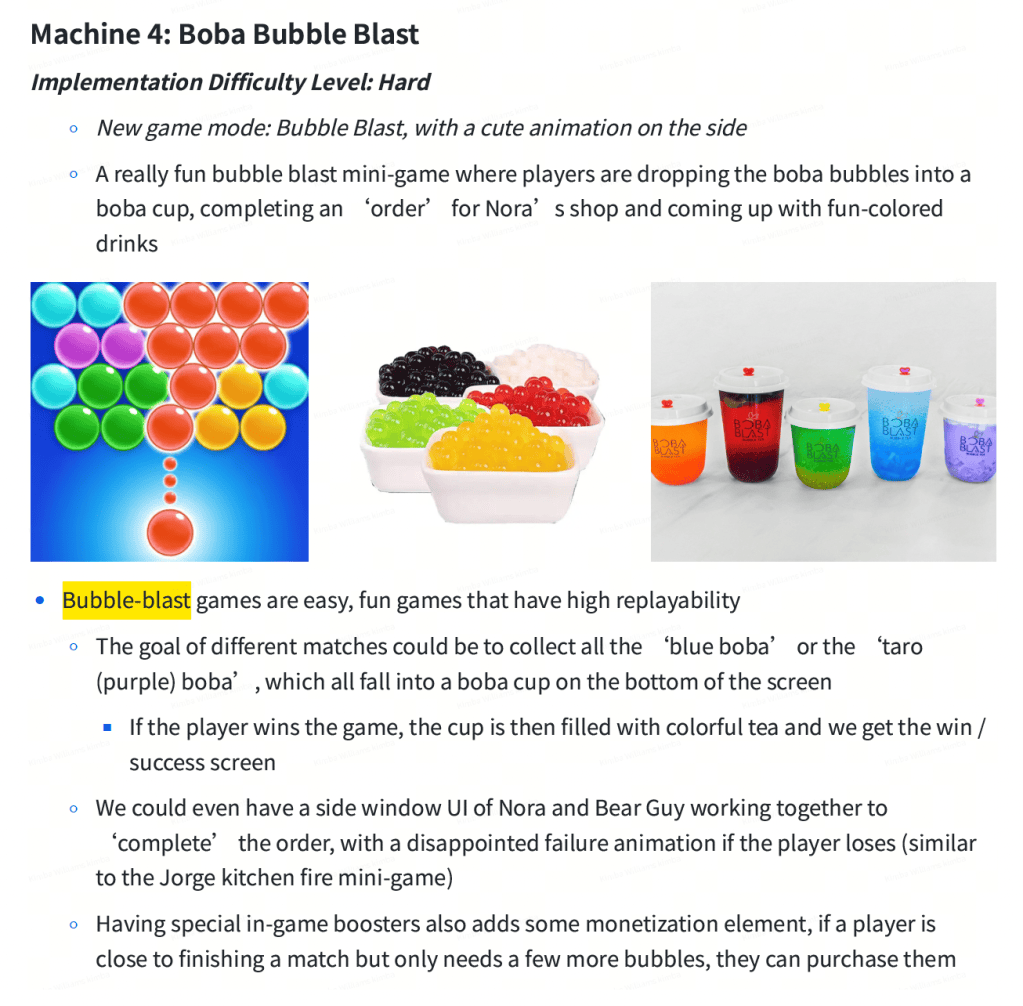
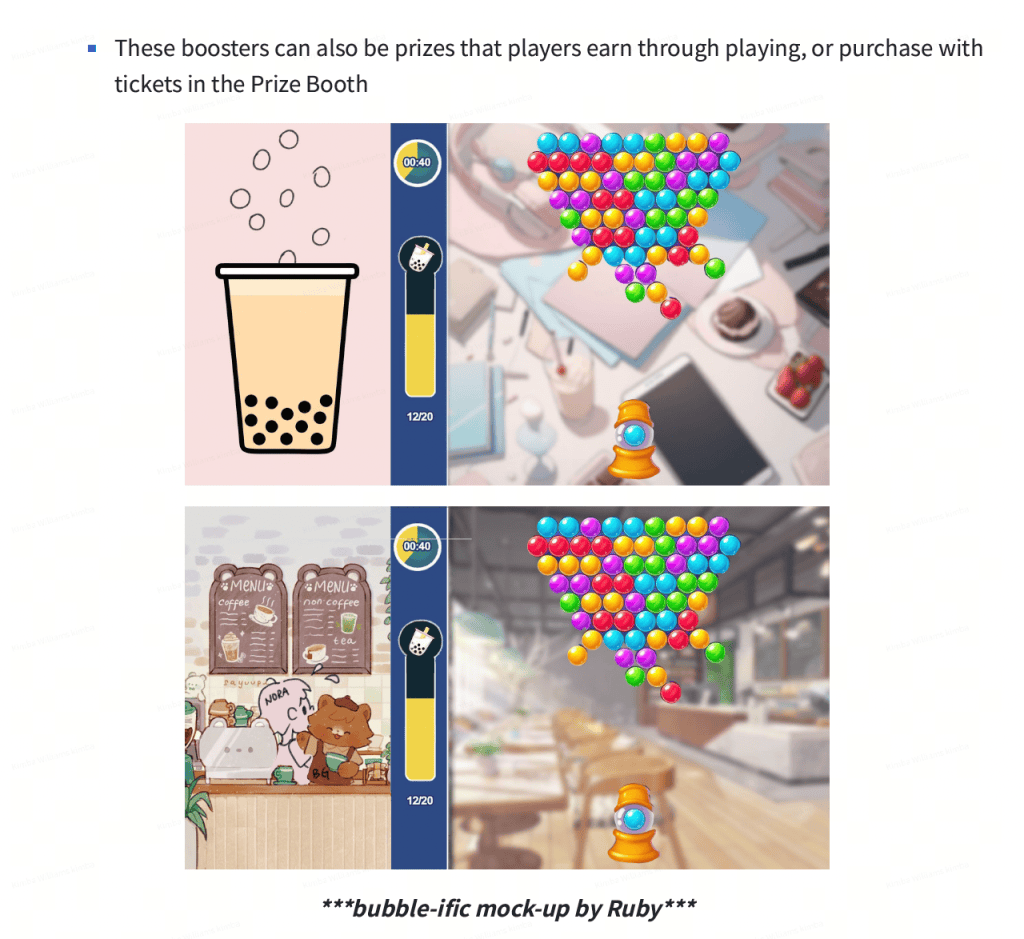
Below is an example of one of the Arcade machines, as well as an awesome concept sketch that one of the artists did for me.
Gameplay
Finally, please enjoy some videos of the gameplay of Modern Community! Below are some of the locations highlighted on this page, which includes a couple of my favorite makeovers that I got to bring to life.

